
Some Unusual Behaviours
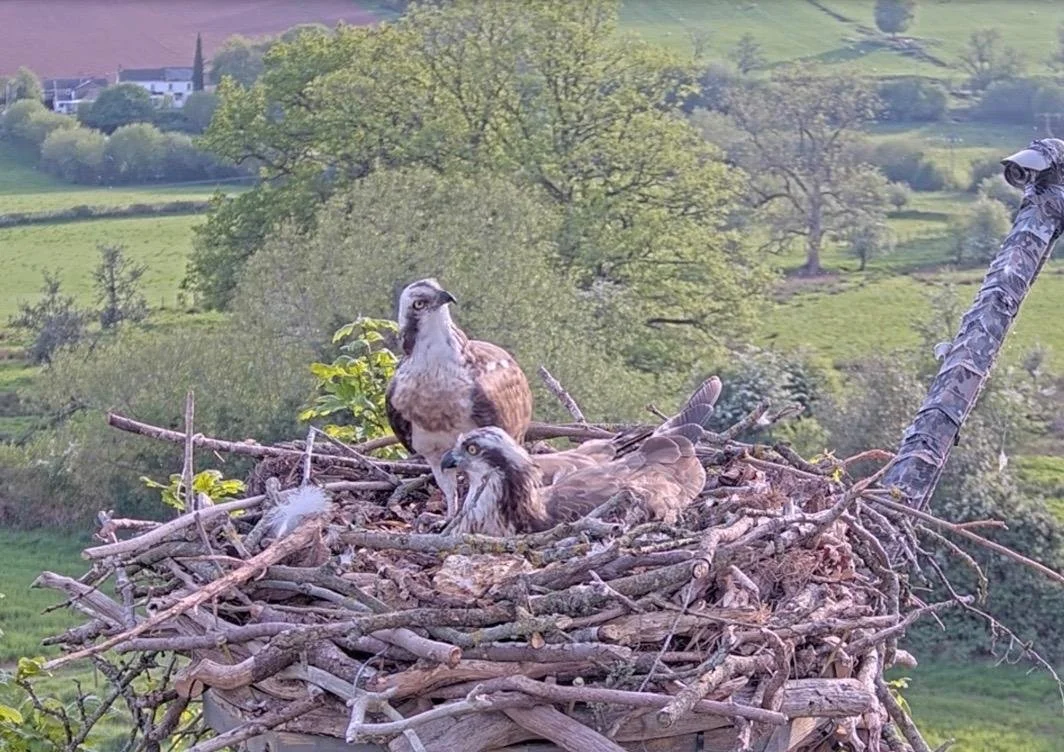
Syfaddan (standing) and Clogwyn
This week’s roundup of activity shows, in general, a quieter period for our osprey pair. While this may be less exciting for our Camera Watchers, there is nevertheless a lot of avian activity (some of which can surprise us) that needs to be recorded. A period of relative calm is actually just what these ospreys need. The less serious disturbance they have to deal with, the more likely that the incubation period will be successful for them. So, as would be expected, the routine of quiet incubation is largely punctuated by food soliciting, fish delivery and short breaks to stretch wings and wash.
However, other factors do come into play and on the morning of Saturday 2nd May our osprey pair were seen exhibiting alarm behaviour suggesting the presence of an intruder in the area which proved to be the least of their worries. The weather became the story of the day as heavy rain set in all afternoon. Clogwyn steadfastly remained low, covering the eggs, wings slightly spread hardly repositioning herself at all. Fortunately Syfaddan was on hand to provide the required fish on demand. Rain eventually eased off at nightfall when Clogwyn was able to flap her wings to remove the excess water.

A very wet Clogwyn kept the eggs warm and dry
The weather took centre stage the next day too as the morning was warm and Clogwyn having taken an early bath in the cool waters of the Usk was seen gular fluttering to help moderate her body temperature. Meanwhile Syfaddan was about to spice up proceedings by flying towards the nest clutching an unknown object in his grip much to the interest of a passing red kite which was bent on harrassment. Syfaddan was forced to divert to the National Grid perch where he deposited his cargo. This became the subject of some concern amongst the towpath Watchers. Even Clogwyn demonstrated a degree of alarm at seeing this strange object on one of her short breaks from incubating, causing her to divert off into the oak copse. Later it was identified as an odd shaped clod of soil and grass intended for the nest. Harmless but unexpectedly out of place, it had caught both osprey and Watchers completely by surprise. It had magically disappeared by the following day.
On Tuesday we witnessed an unusual change in routine. Clogwyn had been on egg watch and incubation duties since 20.13 the previous evening when Syfaddan finally returned at 07.15 with a delivery of fish. A Whopping 11 hours and 38 minutes! That fish, when it did finally arrive, was of sufficient size to feed both of them alternately until Syfaddan took the last remains away to finish.
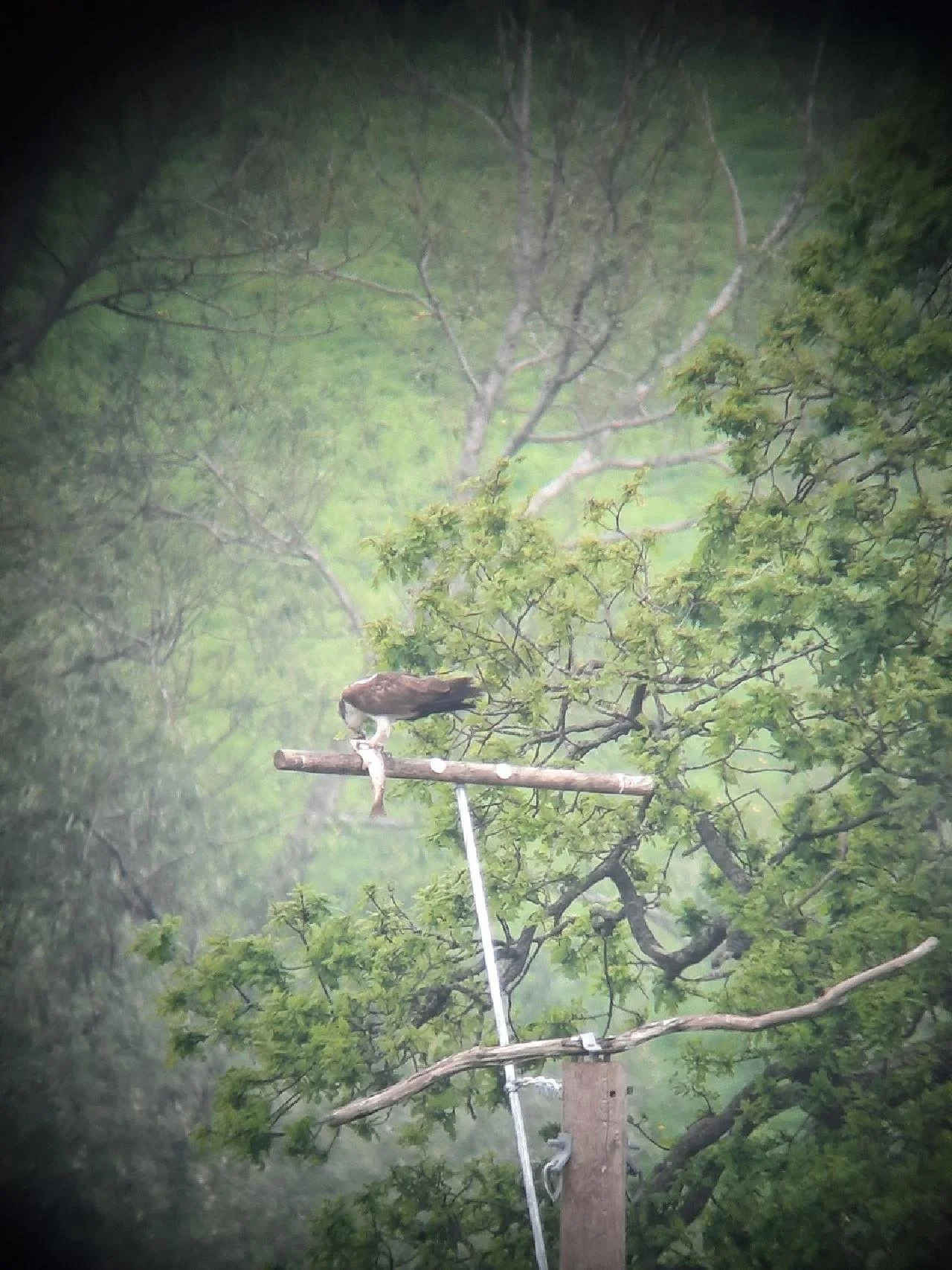
Syfaddan on the National Grid perch
Later that day Clogwyn adopted the risky strategy of leaving the nest to chase crows away and was off the nest, looping round it, for a few minutes till they finally retreated to the oak copse. She also left the nest again later to scoop up some nest lining, but we know from the towpath Watchers that Syfaddan was very close by, which would explain why she felt confident to do so.
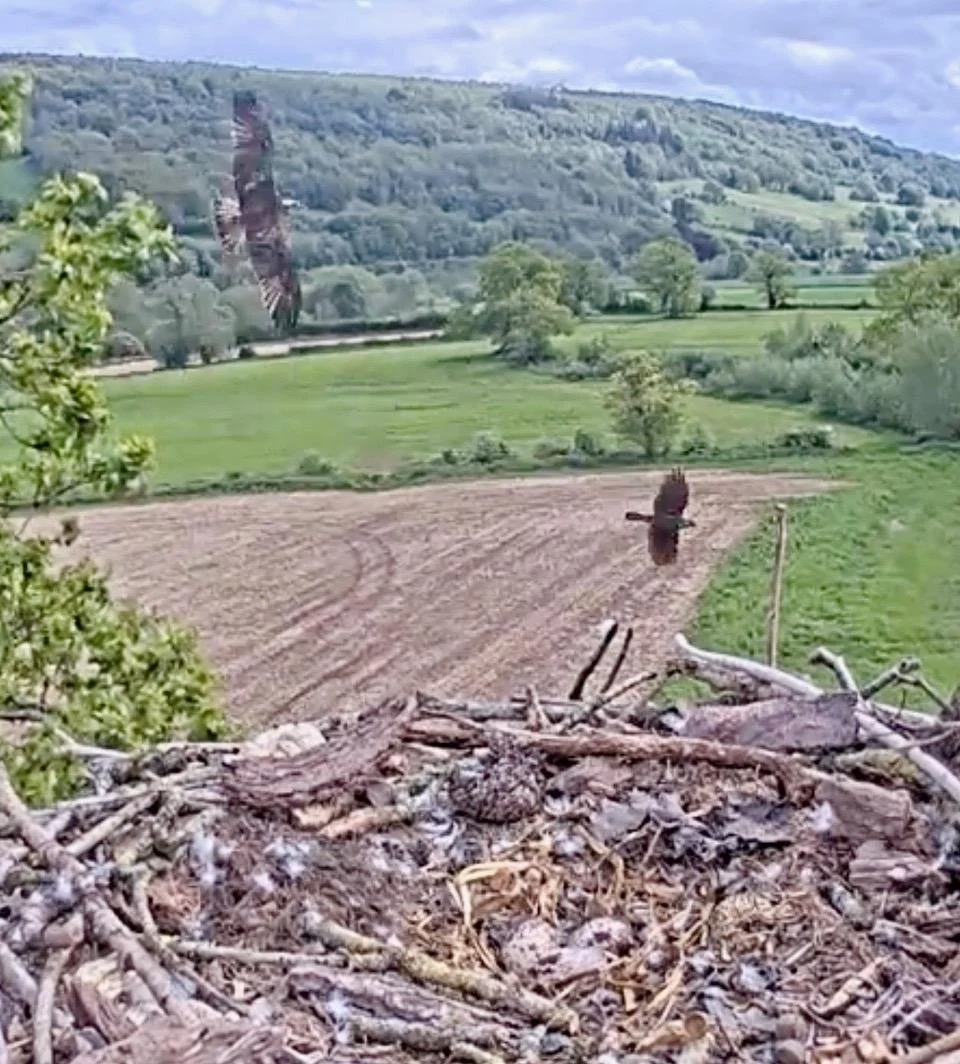
Clogwyn chases crows round the nest tree, leaving the eggs exposed
Normal service was resumed the following day in terms of an earlier fish delivery and it was noted that during the day Syfaddan took over incubation on twelve occasions, each session of variable duration. A couple of Watchers noted how the pair now have change-overs down to a fine art. Also in evidence are Clogwyn’s pale, soft downy feathers, evidence of her moulting.
More out-of-the-ordinary behaviour was on display the next day, Thursday, when Clogwyn left the nest at 05.55, when Syfaddan came to take over incubation, and was gone till 06.49. When she returned she was carrying a fish. For a female to go fishing at this point in the breeding season is a little strange. Fishing is the task of the male. But it’s not completely unheard of - the female at the Llyn Brenig nest in North Wales does go fishing and shares her catch with her mate, just as Clogwyn did. Repeat behaviour will be carefully watched for!
Now that May is here, expect the arrival of 2 year old ospreys on their first return to the UK from migration. Inexperienced, inquisitive young birds, will be exploring and seeking out the places where others of their kind have bred successfully, so they can often intrude at breeding nests. The next few weeks may not be quite as peaceful as this one!