
DEPARTURES
September was the month in which all four family members left the Usk Valley.
During September the nest was vacant for long periods, only in use for 2-3 minutes as a begging juvenile would land momentarily ahead of Syfaddan delivering a fish. Fish transfer from male to juvenile was immediate, Syfaddan departing instantly. The juvenile with fish would rapidly exit too. Thus recording activity became the domain again of our patient Field Watchers who have provided most of the data below.
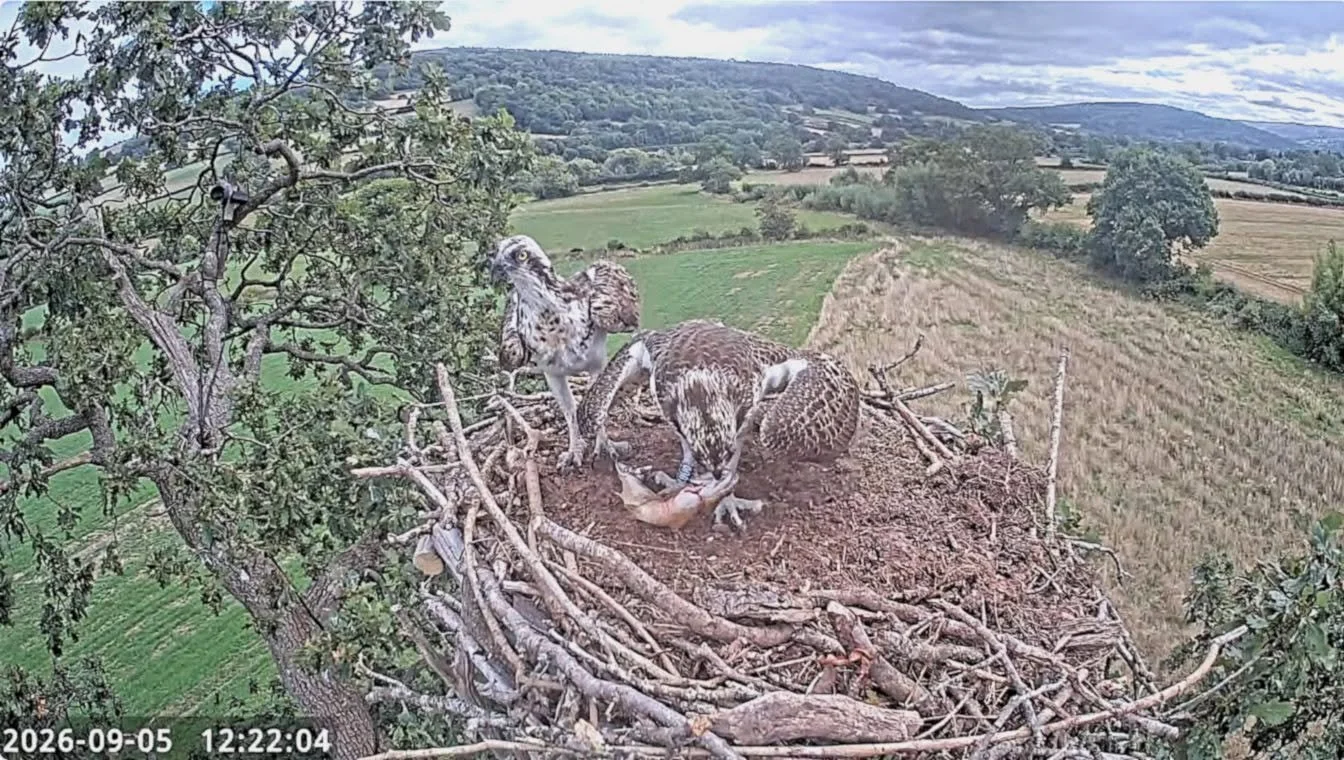
A season of hard graft showing on Syfaddan’s physique as he keeps up the fish deliveries
The breeding season at Gilestone seemed longer to the watching public and volunteers this year. That was largely down to our breeding female, Clogwyn returning a whole 20 days earlier in 2026 than in 2025. As expected, she was the first to leave the valley on 1st September although she was not seen on the nest after 30th August. She was the beneficiary of much admiration by our volunteers, members and social media watchers all season. Not only had she laid three eggs from which two chicks hatched, but it was her actions from then on that brought so many favourable comments. Her dedication in tearing off minute morsels of fish for tiny chicks initially was then heightened by her responses to variable weather patterns - first sheltering them from heavy rain, and then shading them through five heatwaves. The record day and night-time temperatures brought special admiring comments as her unwavering devotion appeared limitless.
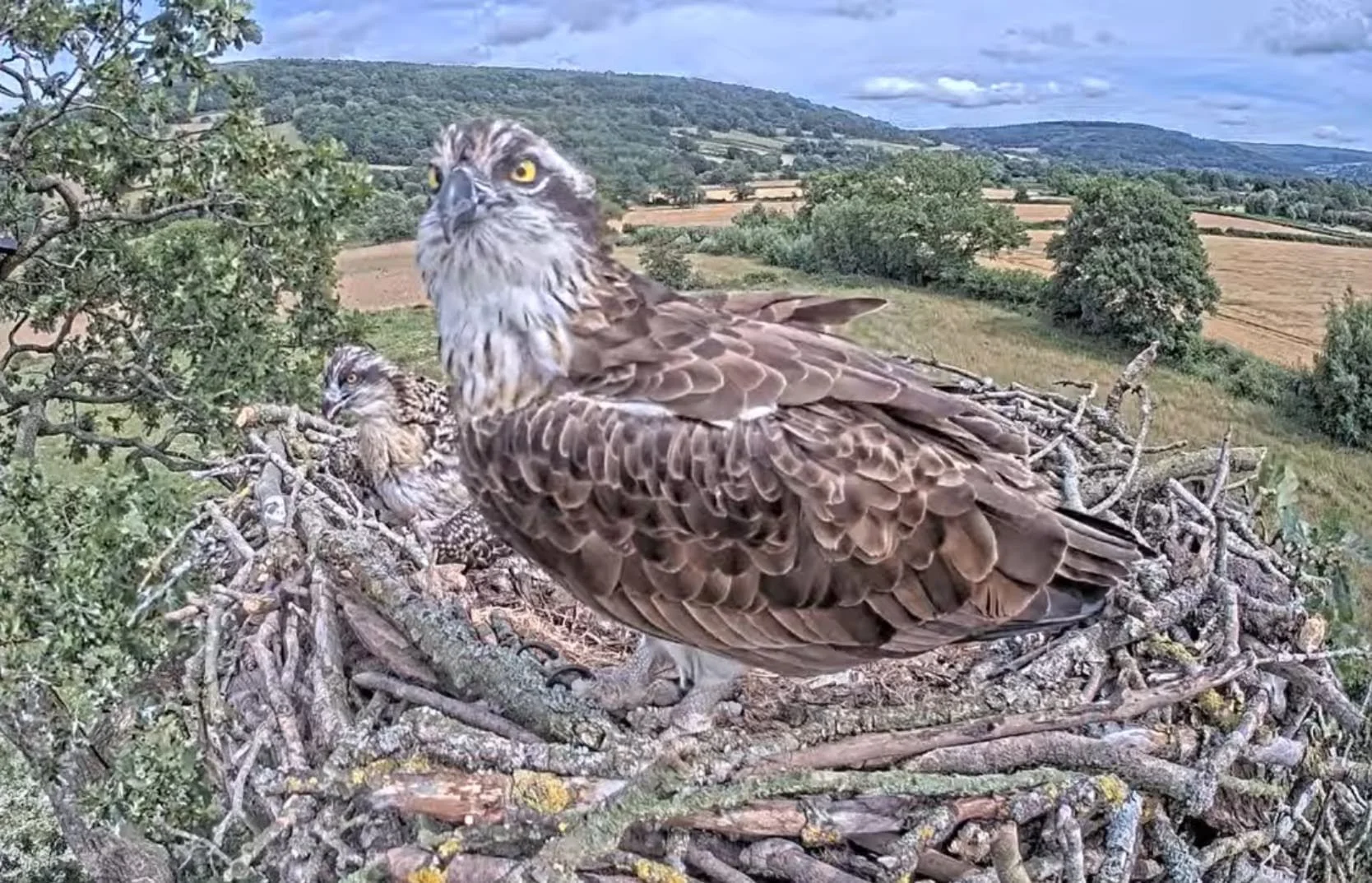
Majestic Clogwyn
The two chicks weathered it all unscathed due to the actions of Clogwyn and male, Syfaddan. The latter keeping up the steady supply of fish to the family on the nest with a delivery every 3 hours or so. After some concern in the early weeks that the first hatched chick (eventually ringed as 0U0) was bullying the second chick (0U1), chick size soon levelled out and after fledging it was mostly 0U1 that ‘turned the tables’ and was quite aggressive in claiming her share of fish deliveries. That aggression appears to have brought dividends in terms of her development such that 0U1 was the next to depart the valley on 5th September at 97 days from hatching.
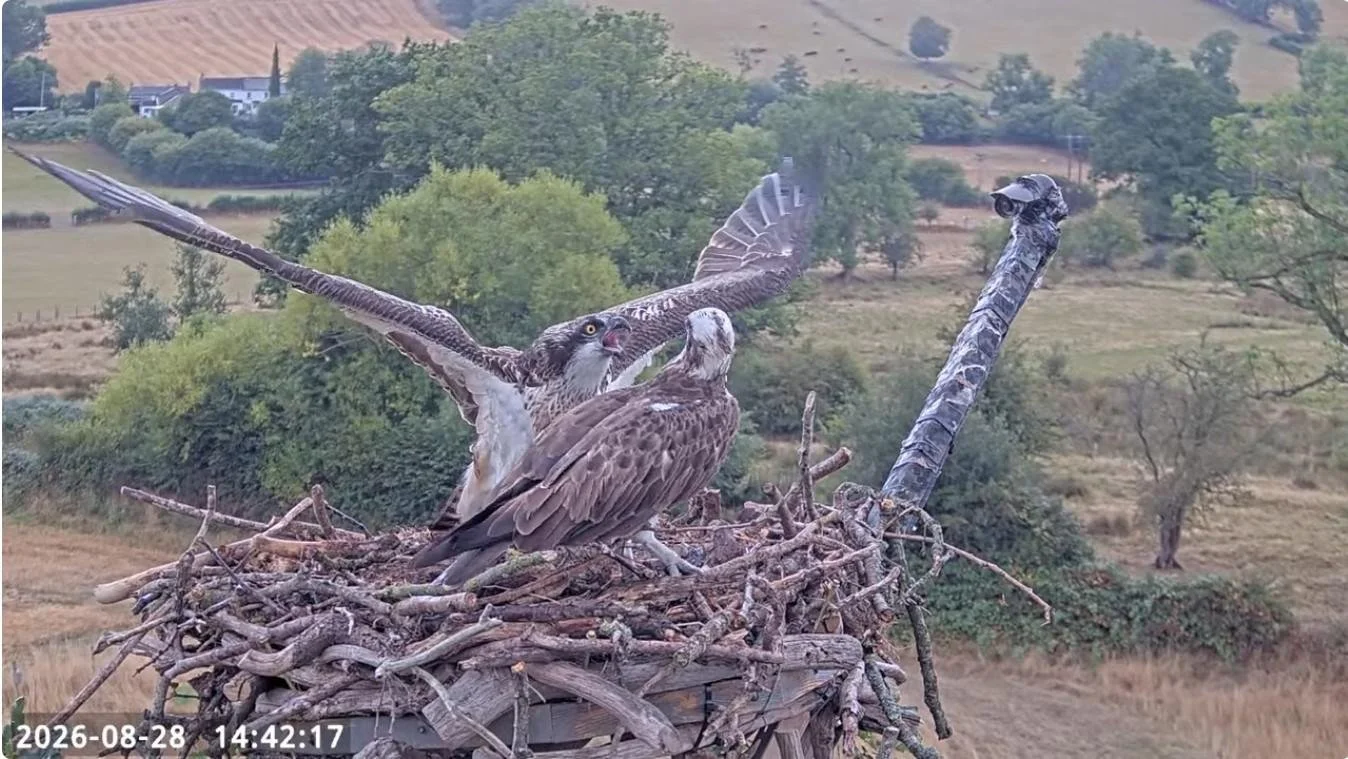
0U1 in aggressive and ungrateful acceptance of a fish from Syfaddan just a week before her departure
The next family member to leave the valley was the slightly older chick 0U0 – incidentally both chicks were assessed as female at ringing in early July, but it has to be remembered that is not always a precise science. ‘She’ was last viewed on the nest just after 1pm on 8th September.
So that left Dad, Syfaddan, on his own. While there was no reason now for him to use the nest, the Field Watcher team excelled in monitoring his presence from various vantage points. He was using several progressively more distant perches in the valley to remain on the lookout for intruders or should any family member return to the nest area and fall back into his guardianship. Importantly, he was resting up too after an exhausting breeding season, and in the expectation that he would be leaving for Africa any day.
That day came on 15th September after being observed resting and taking occasional dives into shallow or deeper water not necessarily for the purpose of catching fish. That departure date was just one day later than in 2025.
The 2026 Timeline showing all important dates during this breeding season is shown on the Homepage.
Everyone involved with this family of ospreys are delighted that it has been another successful breeding season and wish them ‘bon voyage’ as they individually make their migration journeys to west Africa.
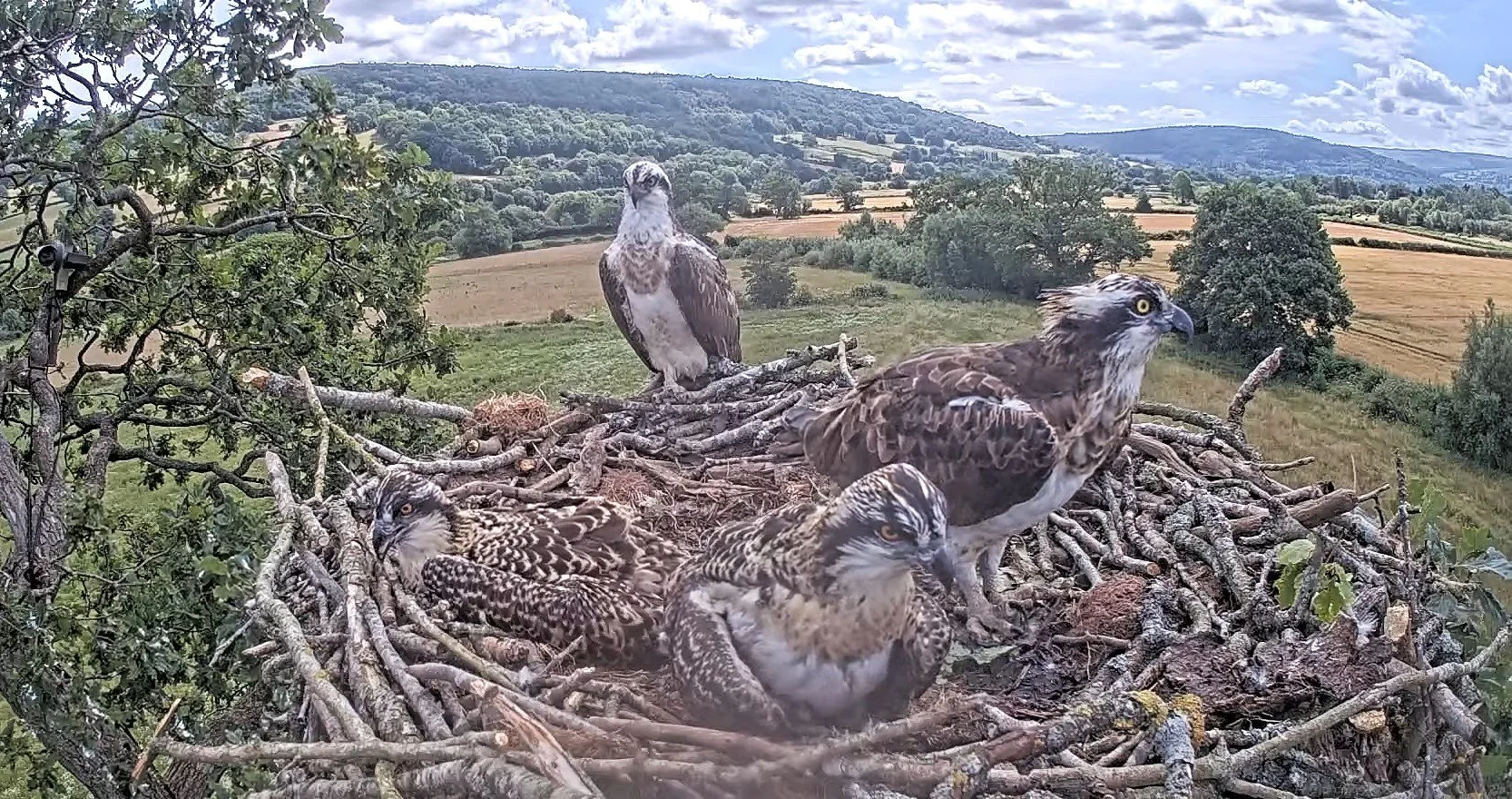
The beautiful family, summer 2026
UVO Trustees and Committee thank all partners in facilitating livestream coverage of the nest that has so obviously enthused the watching public. Thanks, too, to a great team of trained, experienced camera observers for their willingness to take a share of 2-hour observation periods that serve the dual role of supporting nest security measures and in gathering data for future analysis.
Thank you all.