
Will they, won’t they …?
Over the last fortnight, 15 to 28 August, osprey activity and nest occupation has broadly been in line with that reported in recent blog news posts. Daily fish deliveries have also been consistent, almost exclusively trout, with a delivery rate of six per day (range: 4 – 8). Most fish are taken off the nest straightaway by the receiving chick, that was until the evening of 28th August when chick 0U1 rather pointedly grabbed the fish off Syfaddan and fed for over 20 minutes in front of her sibling. All ended well though as Clogwyn then brought in a larger trout and that was taken by 0U0. Even though we have observed our resident female Clogwyn less frequently as her chicks have grown in confidence she has been delivering 1-2 fish a day.
As intimated in recent blogs, visits by intruding ospreys had been expected to increase. Even though a breeding female 469 that visited the Gilestone nest on 6th August bucked the trend of young non-breeders taking interest, from 15th August ‘normality’ resumed. Young ospreys of ‘no fixed abode’ are more likely to visit and over ensuing days three arrived in quick succession:
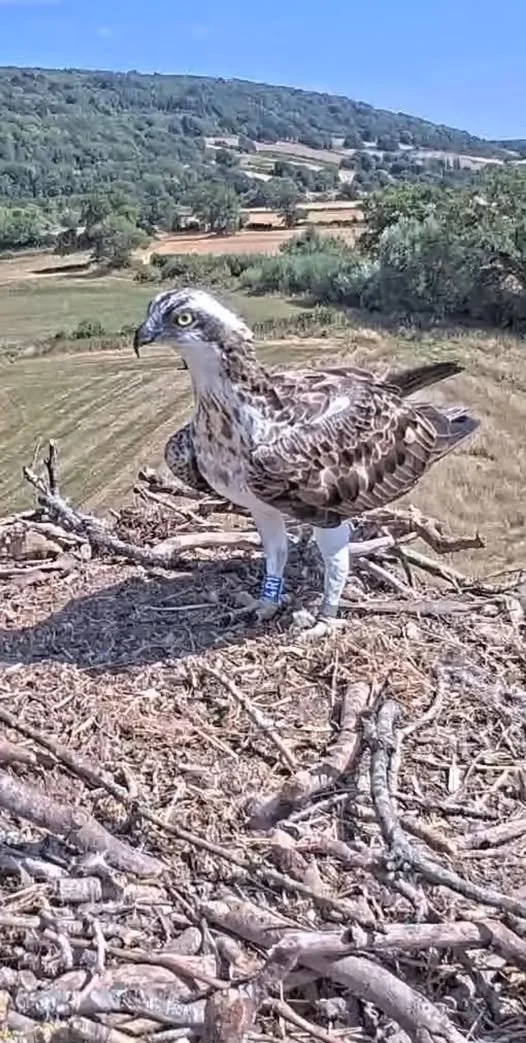
15th August: Blue 4R1, unsexed at ringing in 2024 at a West Midlands nest, briefly touched down on the UVO nest before being seen off by Clogwyn. This bird had previously visited here on 9th June 2026.
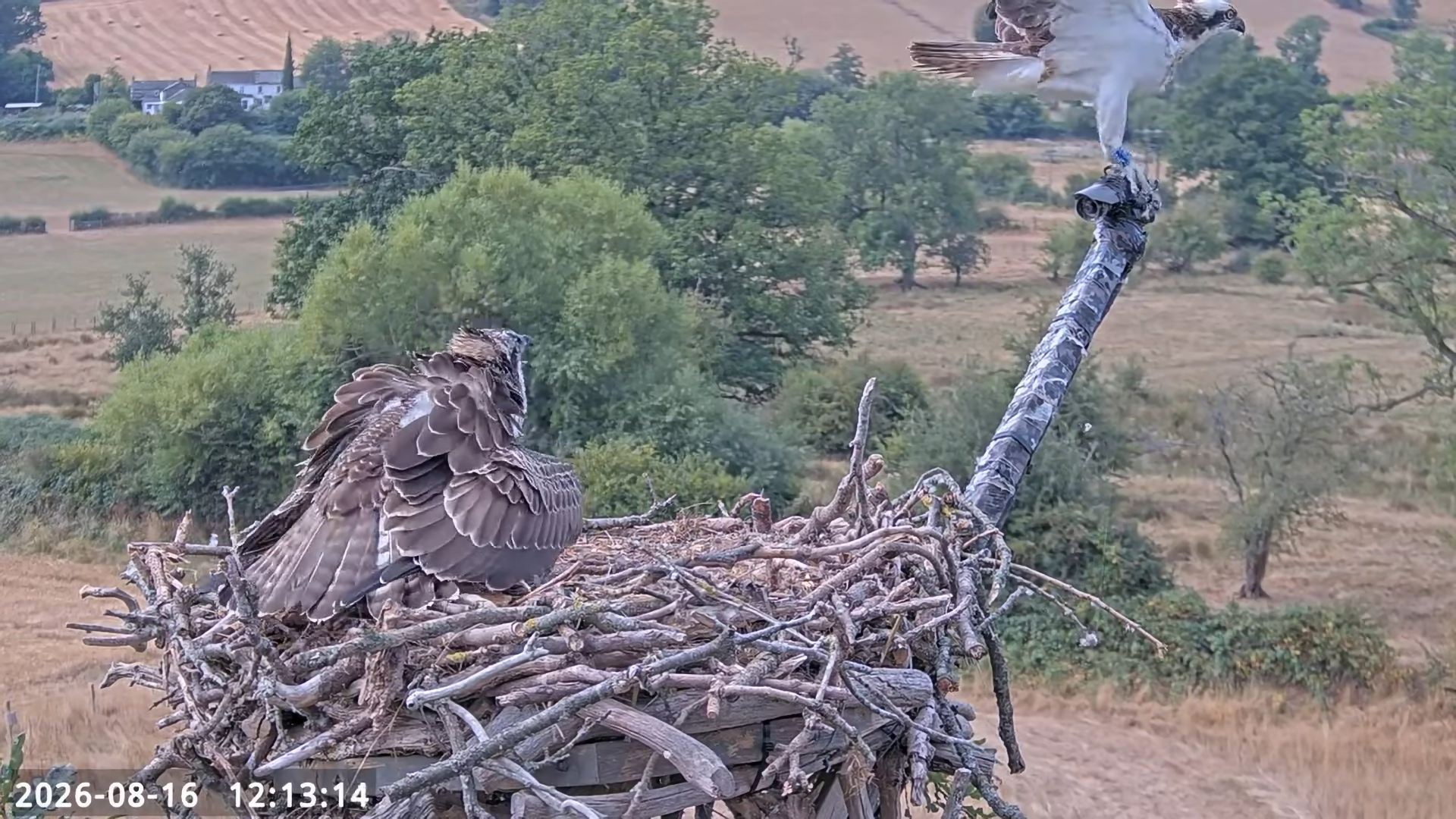
16th August: at 12.13pm intruder Blue 5RO landed on the nest and was made unwelcome by chick 0U0. Male 5R0 was ringed at Poole Harbour on 1st July 2024.
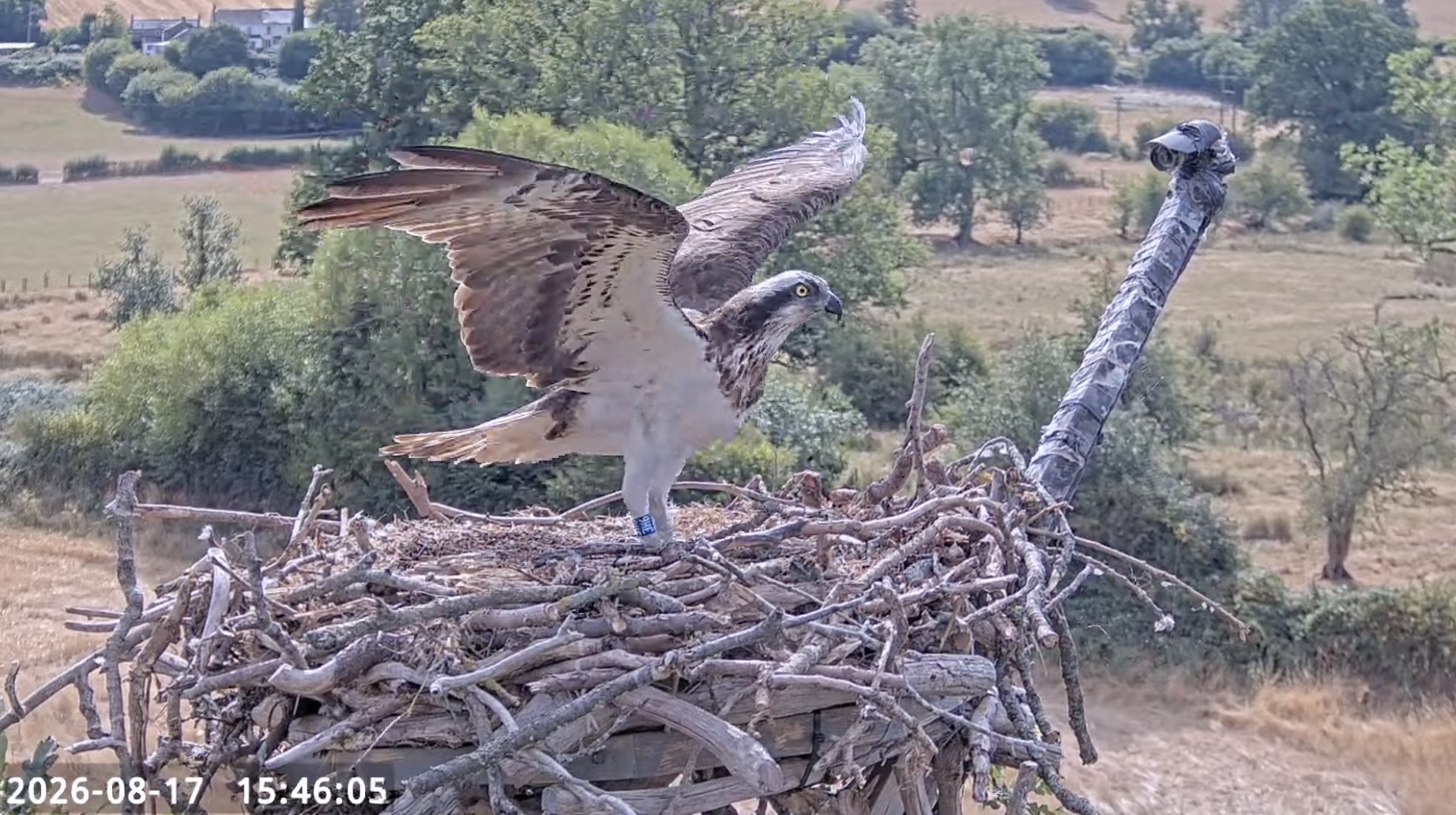
17th August: a Rutland Water female chick 3H6 was ringed there on 24th June 2023 and made a return to the Gilestone nest at 15.46pm today. She had been our first ringed intruder of the year on 12th April 2026. Where she has been since is unknown, of course, but she has the credentials to become a future breeding colonist in Wales as have several birds originating from Rutland Water in the past.
Usk Valley Ospreys have received several enquiries in recent weeks over the expected timing and order of departure of the family members. Timing is always difficult to predict – they will go when they feel ready and weather conditions indicate a suitable departure window. It is likely this year that all will have gone by mid-September. However, the traditional order of departure is initially the female, then the chicks perhaps 7-14 days later, and finally the male. Even though our female Clogwyn is reducing her input into the nest she is visiting a couple of times a day normally bringing a fish. She is expected to leave within days. 0U0 and 0U1 will then leave individually, not necessarily in that order (and matching hatch date), and finally Syfaddan will leave when he is confident that all the other three have left the valley. All will depart and travel independently of each other with a likelihood they will spend our winter in west Africa. Just one of the many wonders of bird migration.
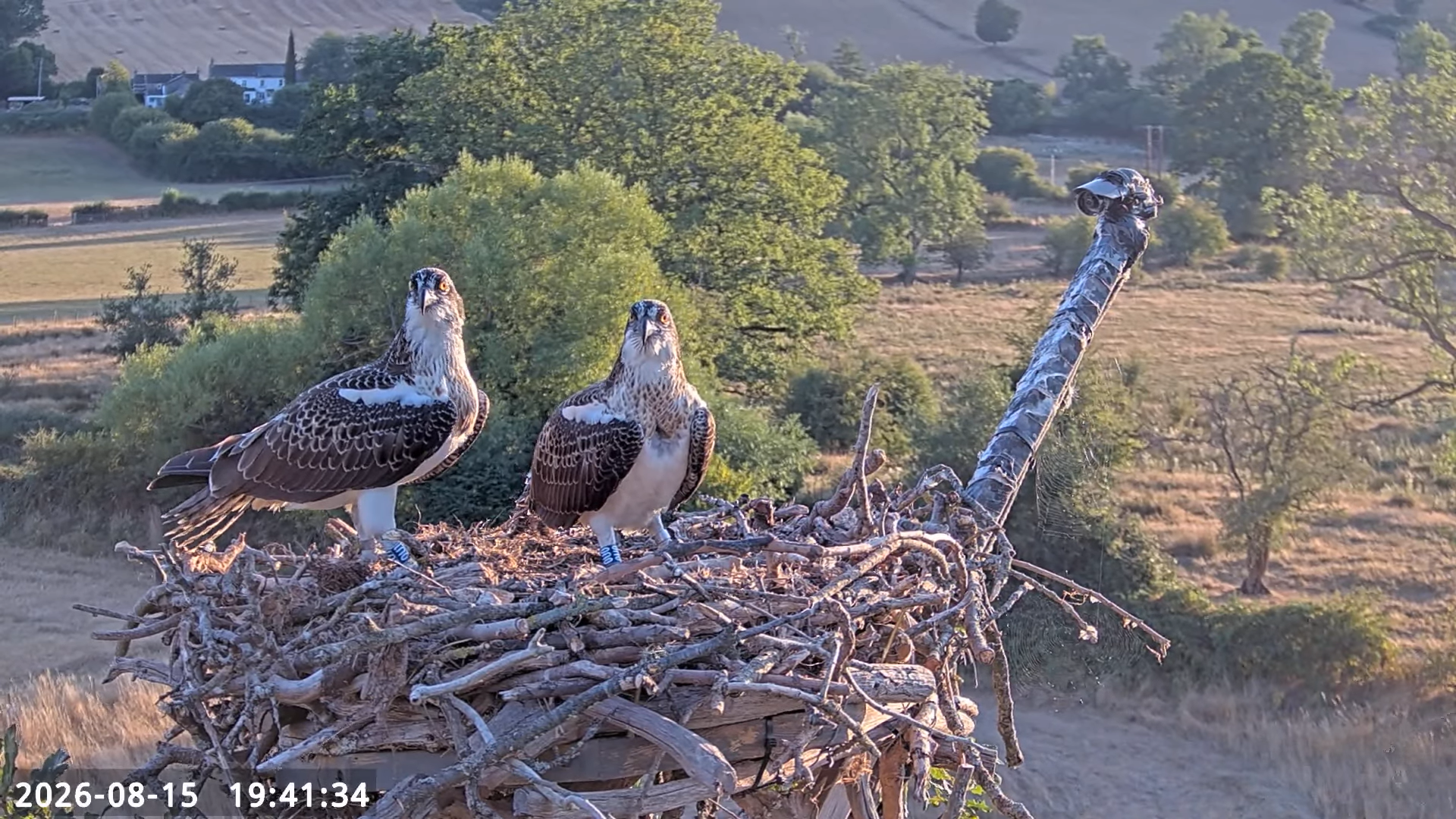
0U0 and 0U1 contemplate their imminent departure
All members and supporters of Usk Valley Ospreys will wish them well on their journeys – but in the meantime we shall enjoy their company until they are ready to leave.